1905 — 2026
A Century in Ink
The story of Conway Stewart, told from the company’s own archive.
1905 · London, the year the door opened
The Door at 13 Paternoster Row
1905
The Door at 13 Paternoster Row
Two young men, one back room, five shillings a week.
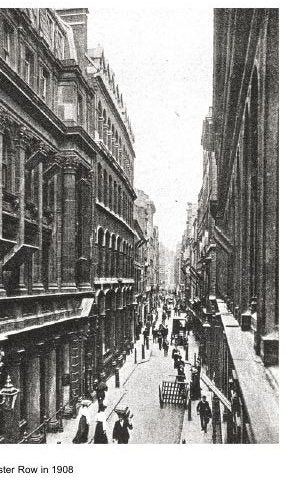
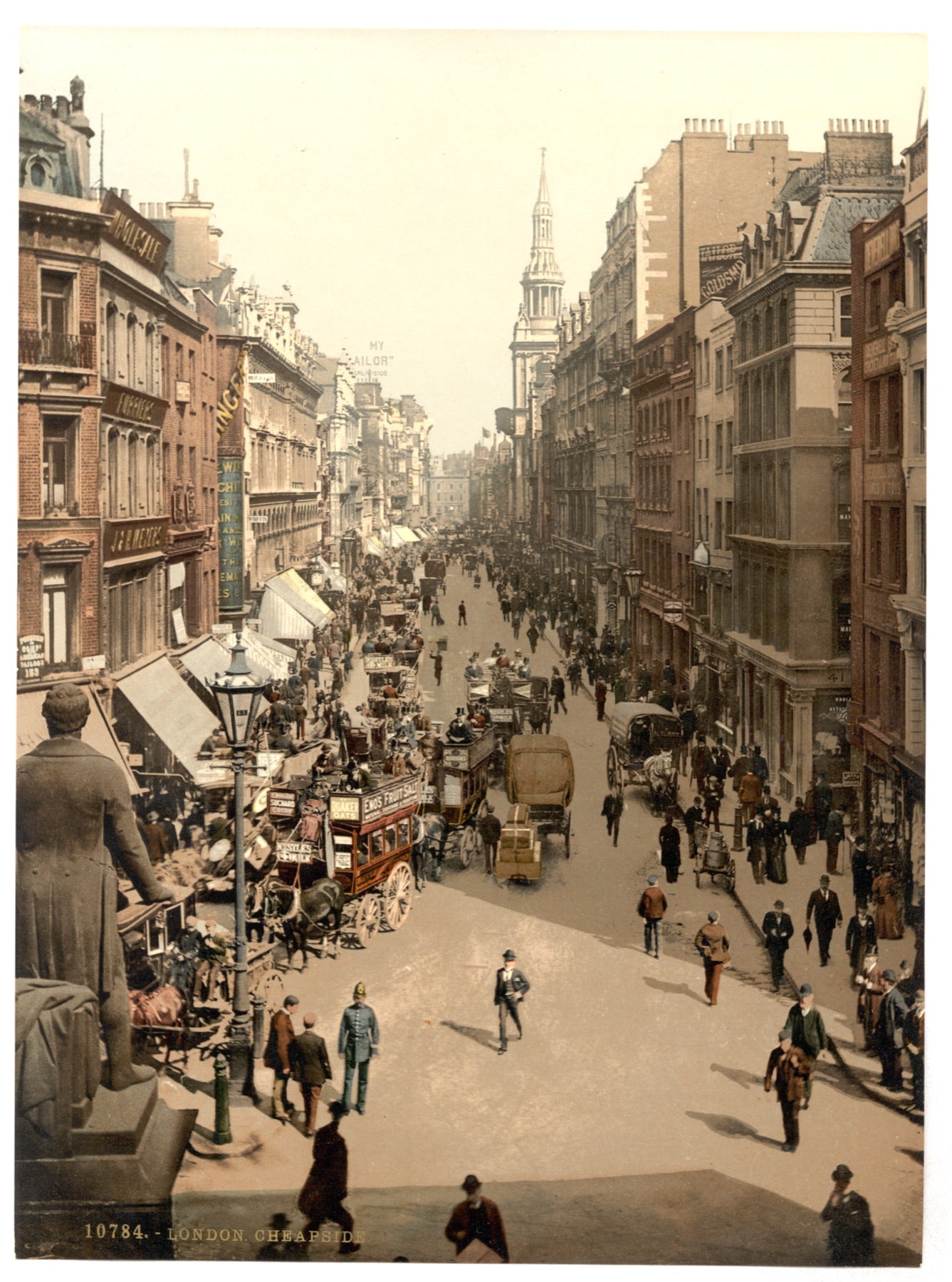
In early 1905 two young Londoners took a first-floor back room at 13 Paternoster Row, a narrow street of printers and booksellers behind St Paul's, and began to sell fountain pens. Francis Charles Jarvis was 22. Thomas Howard Garner was 28, and the rent was five shillings a week.
“Fifty years ago the first entry was made in the ledger of a company which had taken a small, one-room office in Paternoster Row. It read F. C. Jarvis (loan) £25; T. H. Garner (loan) £25.”


1905–1918
Wholesale Beginnings
They stop selling other people’s pens and start making their own.
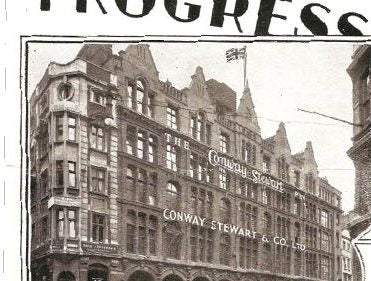
By June 1906 the two men had a company, Conway Stewart & Co, with a capital of £50 and three rooms further up the same street. Turnover that year passed £2,000 across nearly 900 separate sales, and the next year it more than doubled.
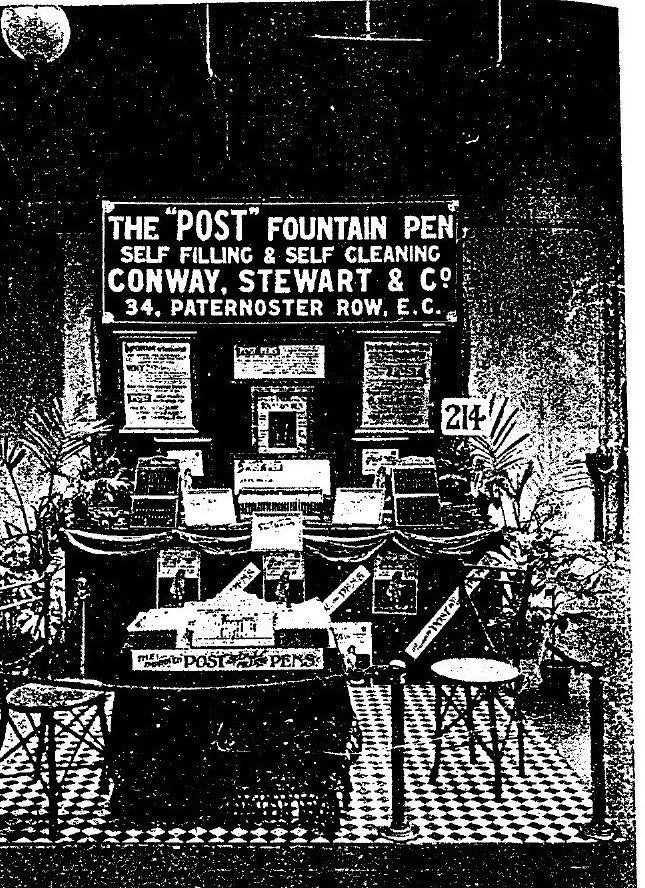
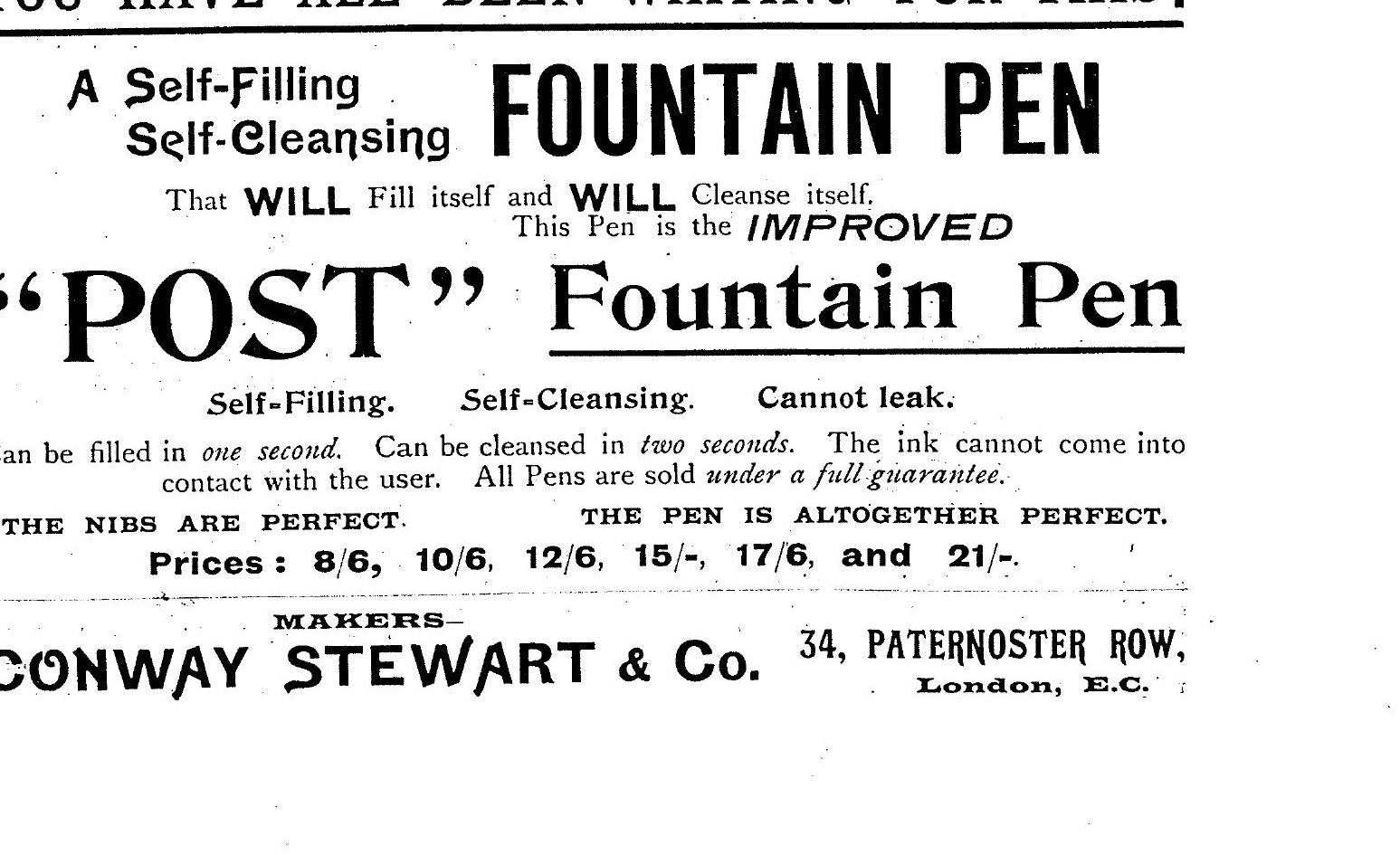
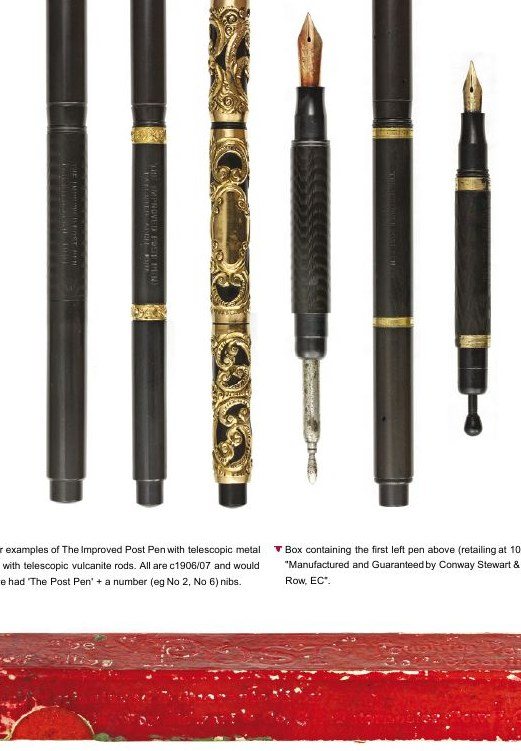
The self-filler they sold from three rooms off St Paul's is long gone. The house that sold it is not. The Post pen
“This pen is retailed from 8s. 6d. to 21s., and the large number of inquiries and orders at the exhibition undoubtedly proves that the 'Post' pen has only to be shown to find a customer.”
1919–1938 · London finds its colour
Colour Arrives
1919–1938
Colour Arrives
Colour makes Conway Stewart famous.
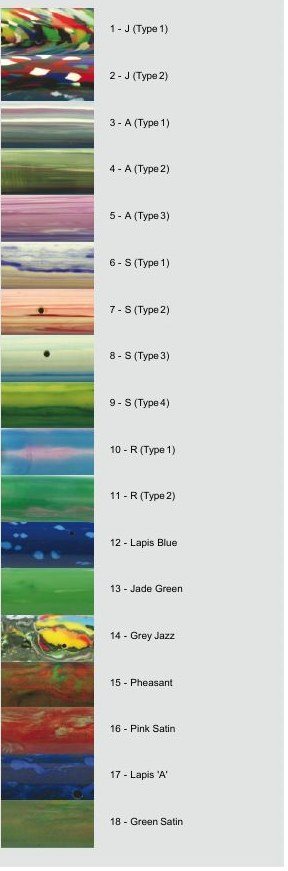
Until the 1920s pens were black, cut from vulcanite, a hard black rubber. Conway Stewart brought in coloured pens, and the record is blunt about what followed: the coloured types created a world-wide vogue. The colour came from casein, an early plastic made from milk, in shades named Lapis Blue, Jade Green, Grey Jazz and Pink Satin.
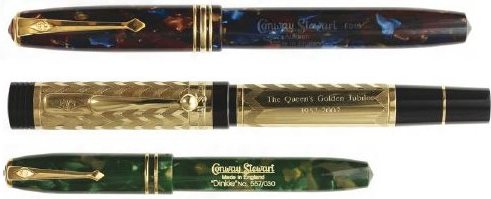
The Dinkie is not in the range today. The Duro, on the bench beside it in those years, still is. The Dinkie
“THE REGISTERED TRADE MARK of their successful line of miniature Fountain Pens”

1939–1948 · Searchlights over London, 1940
War Work
1939–1948
War Work
The war takes the machines; the house survives.
When the war came, the machines were turned over. The lathes were changed from plastic to metal work, and the factory made more than 20 million small parts, many of them accurate to one thousandth of an inch. It also made metal parts for insecticide sprayers, sent out for use in Burma.
“In the fountain pen industry the manufacturers are operating under a licence to make 25 per cent. of what they made in 1939”


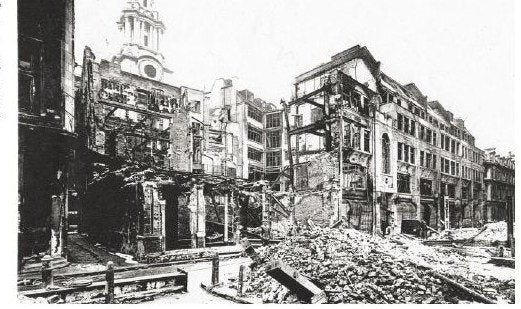
1949–1962 · London at the Jubilee
The Golden Jubilee
1949–1962
The Golden Jubilee
The busiest years the company ever has.
In 1950 and 1951 the whole works moved east to Copperfield Road in Mile End, its reception lit by lampshades shaped like two large gold nibs. The original staff of two men and a boy had grown to nearly 400, and twenty-four nib grinders worked four to a bench. One finisher remembered the thrill of repairing a pen sent in by someone famous, such as Winston Churchill.
The oversize pen that topped the Jubilee list, at the head of the range again. The No. 100
“Today, nearly half the total production is exported”


1963–1975 · Apollo 11 leaves Earth, July 1969
The Long Dusk
1963–1975
The Long Dusk
The world reaches for the Moon, and for the ballpoint.
The company had money and no appetite for change. In April 1963 it reported the previous year's profit at £11,000, with £80,000 cash in the bank. Two weeks later a bid arrived valuing Conway Stewart at £191,000, roughly 30% above the market price of the shares, and it was promptly accepted.

1989
Indiana Jones and the Last Crusade
Henry Jones Sr. downs a tank gunner with a squirt of ink from his fountain pen.
The scene has its own pen in the range today: the Indiana Jones pen
1994–2014 · London, the name comes home
Revivals
1994–2014
Revivals
The name refuses to disappear.
For nearly twenty years the name belonged to nobody in particular. Don Yendle, who had been assembling pens in a converted primary school in a small village in south Devon, acquired the Conway Stewart trademarks in 1994 from an entrepreneur in Dubai who bought and sold trademarks.
The oversize pen of the 1997 revival, and the one the workshop is still known for. The Churchill
“the 109-year-old company”

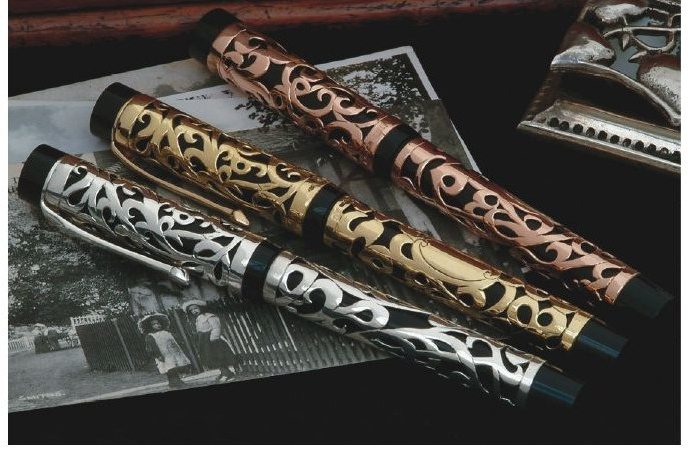

2013
Peaky Blinders
Three pens named for the Shelby family: Tommy, Arthur and Polly Gray.
The story of the release is on the blog: the Peaky Blinders release

2015
Kingsman: The Secret Service
Conway Stewart pens pass through both Kingsman films.
The pen is in the range today: the Churchill Classic Black

2017
Darkest Hour
Gary Oldman's Churchill writes with a Conway Stewart Churchill.
The pen on his desk is in the range today: the Churchill Classic Black
2016–today · London today
Emsworth
2016–today
Emsworth
Still made by hand, an hour from where it began.
When the Plymouth factory closed, Bespoke British Pens Ltd bought what was left of it: the stock of components, the technical drawings, the domain and the trademark. Assembly of pens from those original components began in early 2015, first on the Isle of Wight and then at Emsworth in Hampshire.
The pen of this century is still made by hand. Choose yours. Made by hand
1905 — 2026
The Journey in Ink
Nine addresses. One line of ink.
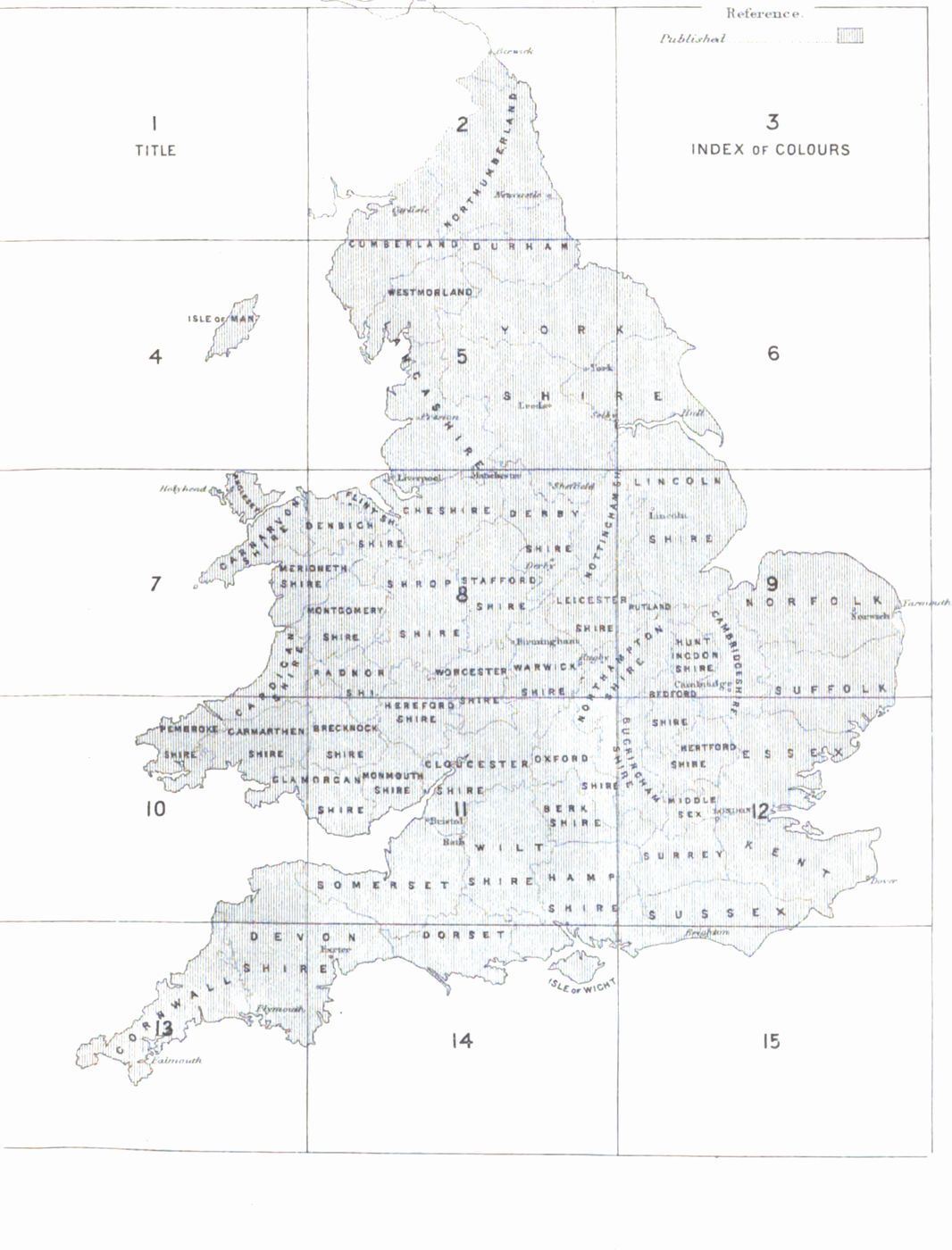
Every home the company has had, from a back room in the City to the coast at Emsworth. Tap the names to meet each one.